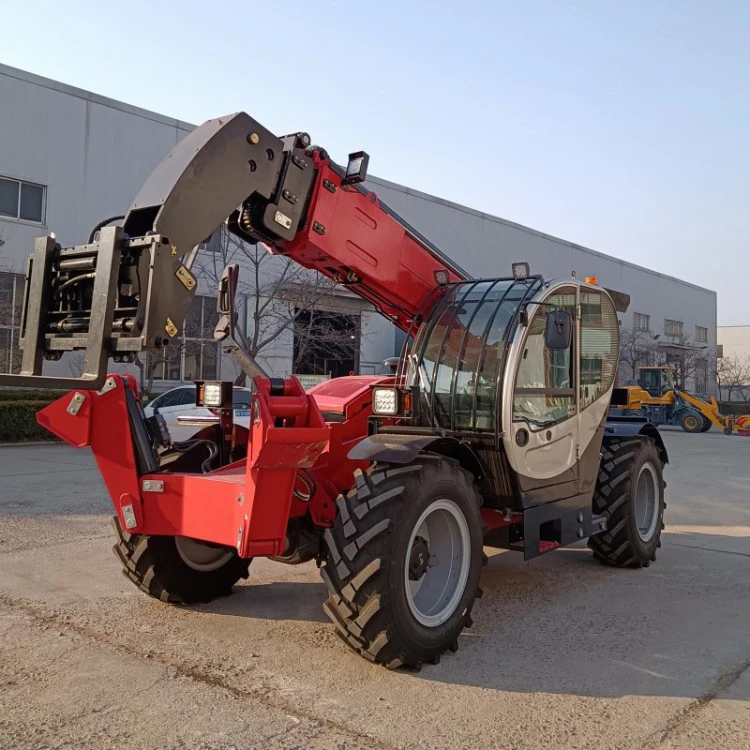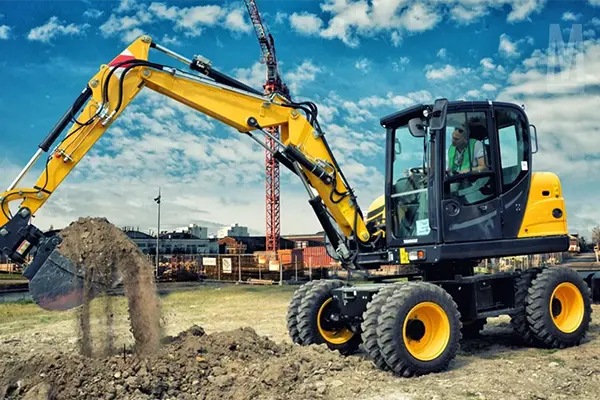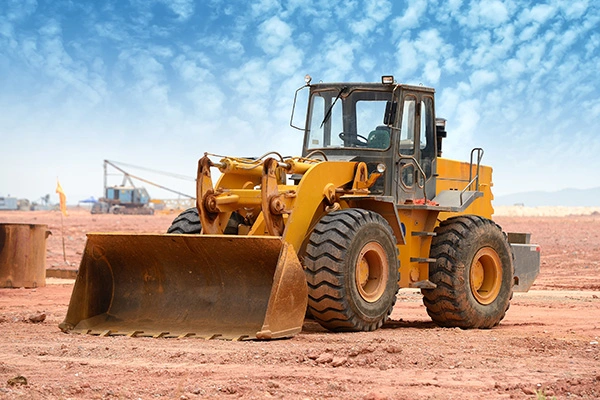

We offer a comprehensive one-stop sourcing solution across construction machinery, agricultural and forestry equipment, marine and power systems, hydraulic components, and new energy devices, all customizable to meet diverse project needs.
Qingzhou Mingxu Supply Chain works with specialized machinery producers in Shandong to supply winter maintenance equipment, construction machinery and agricultural machines. The company holds import/export licenses and supply chain management qualifications. For snow removal equipment, Mingxu coordinates product specification, quality checks, export paperwork and spare parts support. Our staff can assist with matching a brush to your vehicle chassis, selecting the right working width, and arranging delivery. Factory visits can be scheduled.
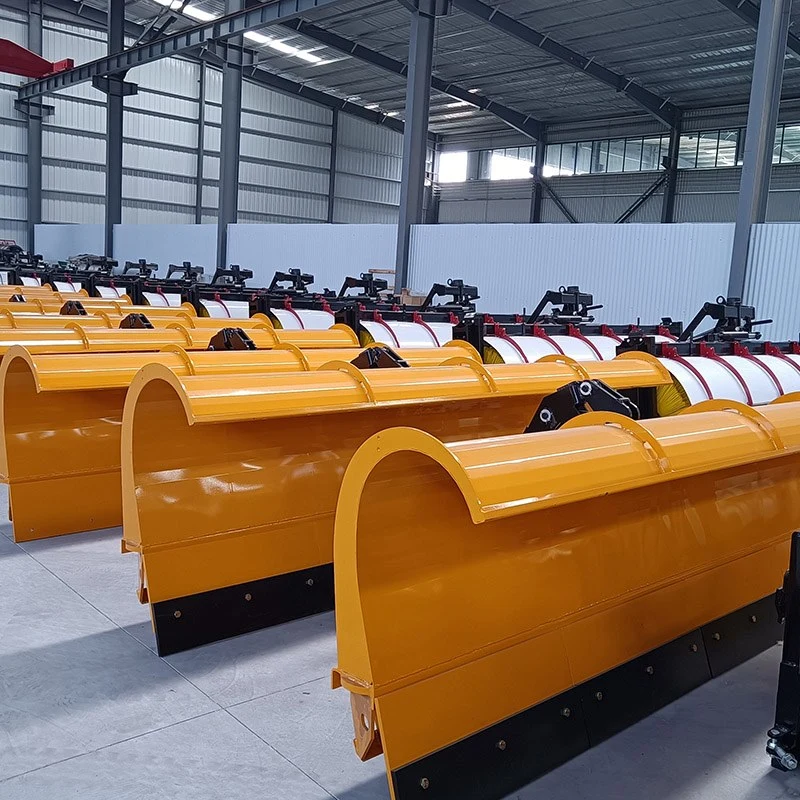
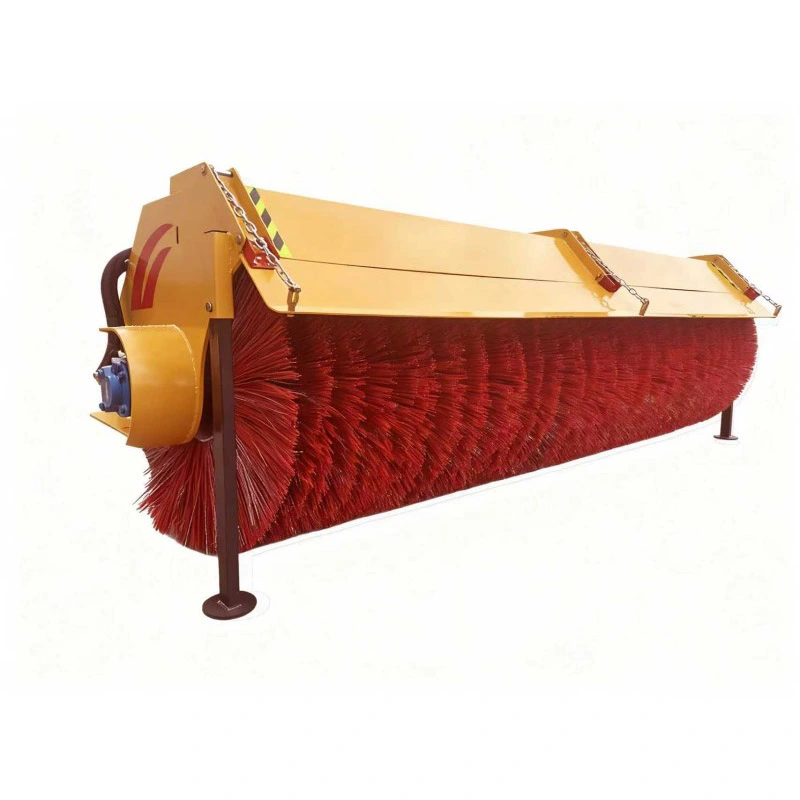
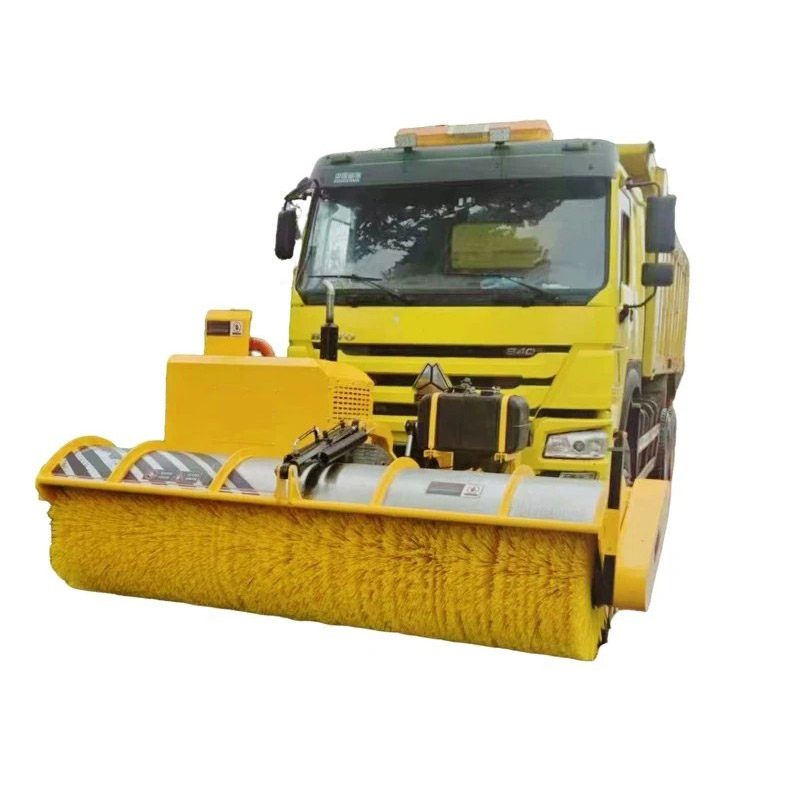
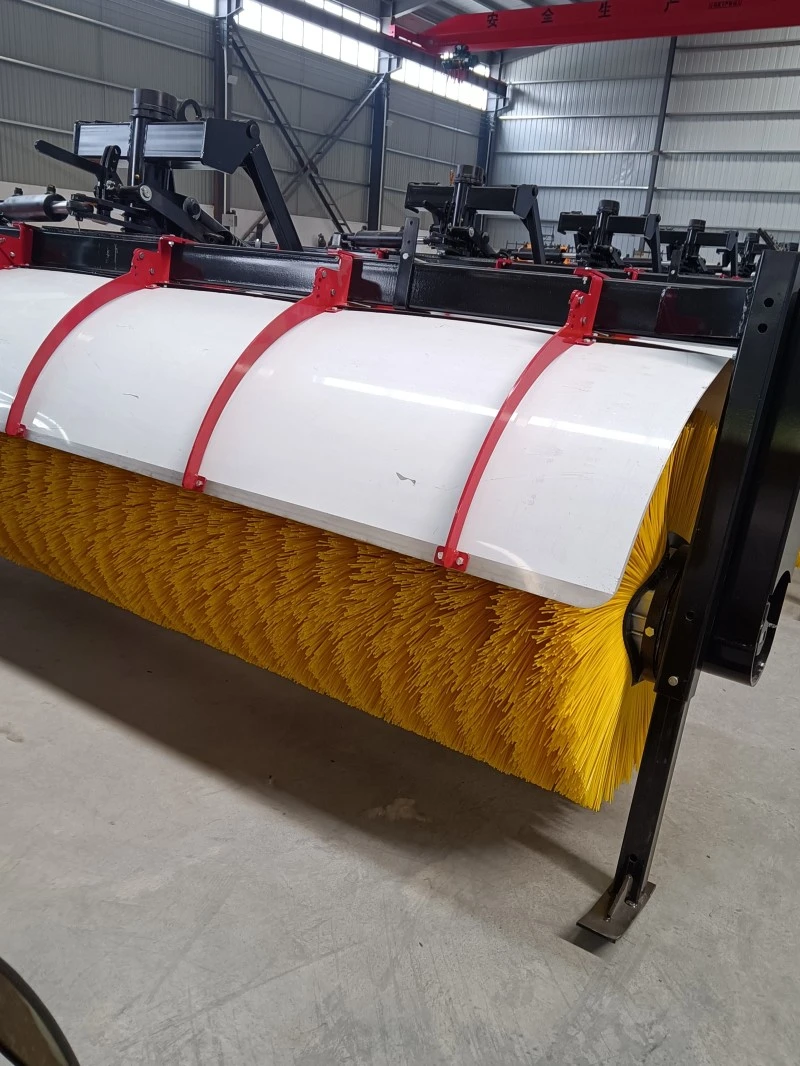
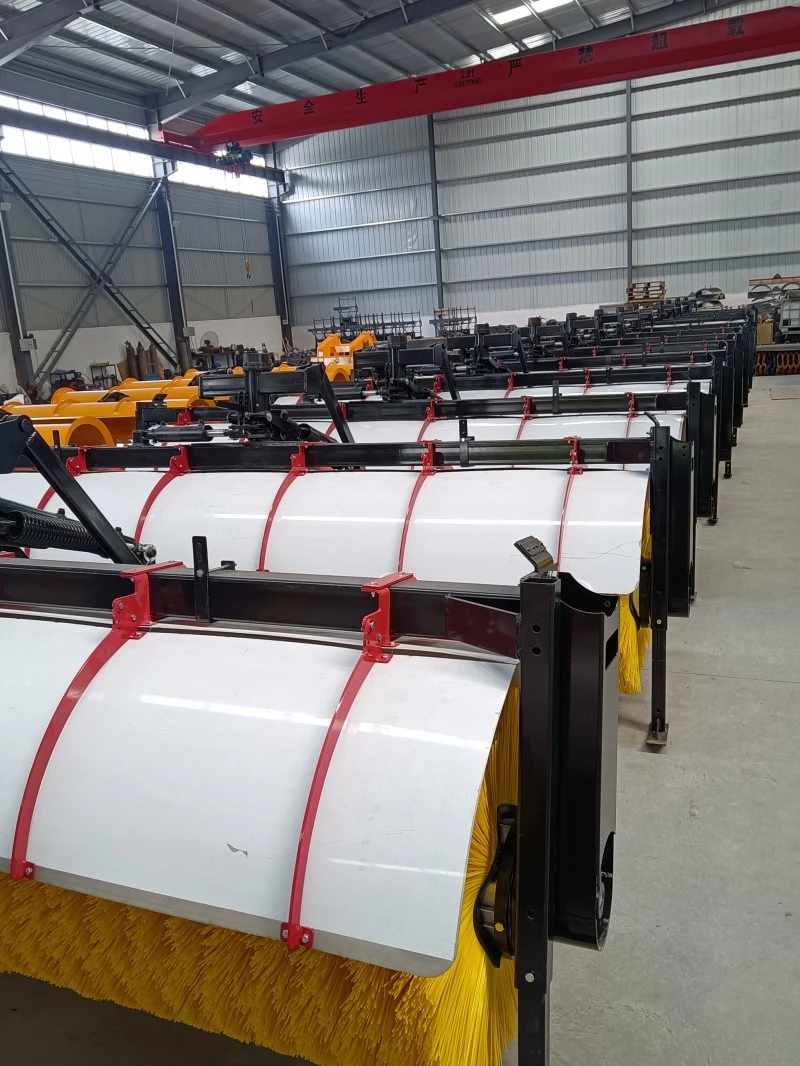
This Large Vehicle-mounted Rotary Snow Brush is built for high-capacity snow clearing on expressways, airport service roads and urban arterial routes. It mounts to the front of heavy sanitation trucks or dedicated snow-clearing chassis. The standard roller is assembled from high-density polypropylene segments and powered by an imported hydraulic motor. An optional steel wire composite brush is available for compacted snow and light ice conditions. A four-link floating mechanism allows the brush to follow potholes, curbs and cross slopes while keeping the bristles in contact with the ground. Working width, hydraulic power and anti-freezing configurations can be adjusted to match different carrier vehicles and road classes.
Hydraulic oil from the carrier vehicle flows to the drive motor, which rotates the brush roller. Bristles strip snow from the pavement and throw it to the side. The brush assembly sits on a four-link floating frame with spring buffers, so it rises and falls over surface irregularities without losing ground contact. A hydraulic control valve changes the left-right deflection angle, while the lifting mechanism raises the brush for obstacle avoidance and storage. Because the hydraulic circuit is independent of the travel drive, brush speed can be matched to vehicle speed and snow depth.
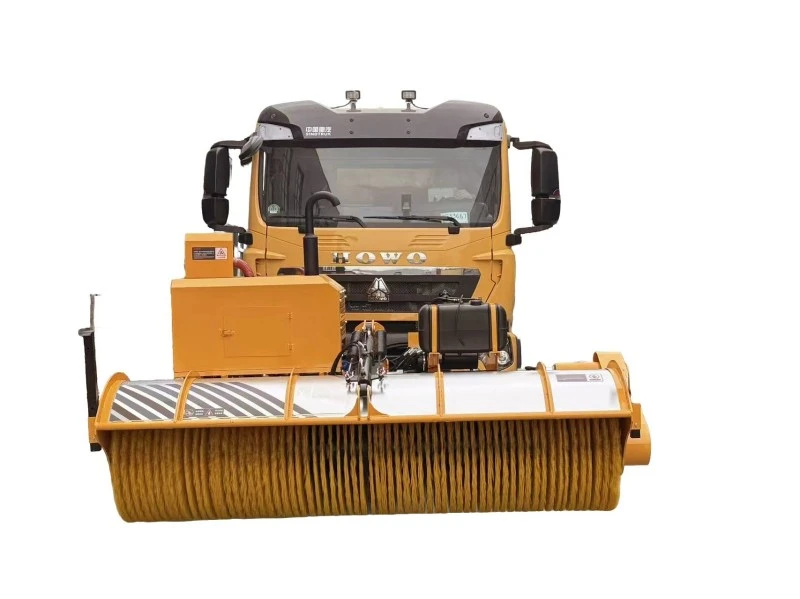
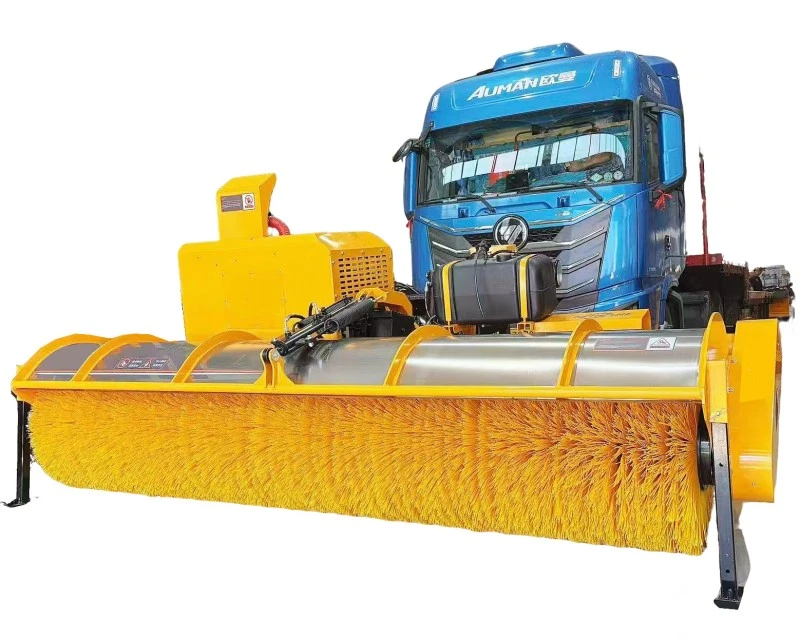
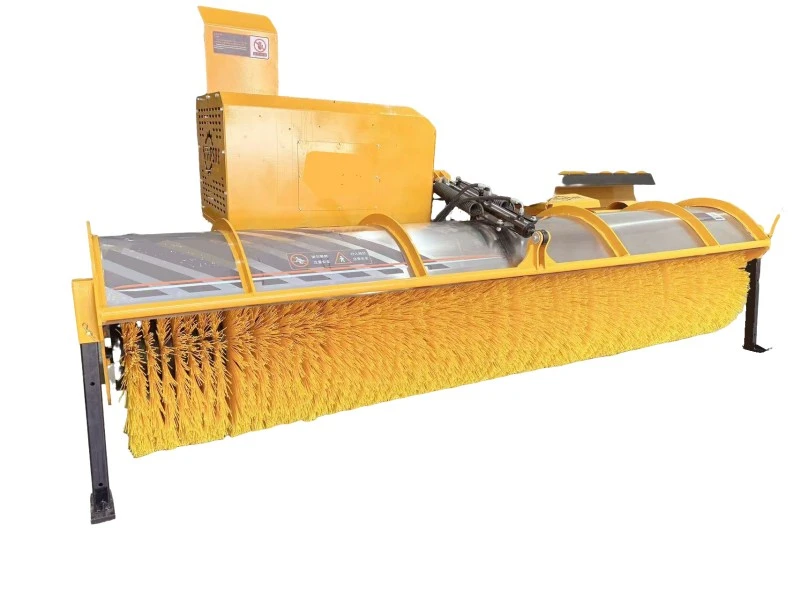
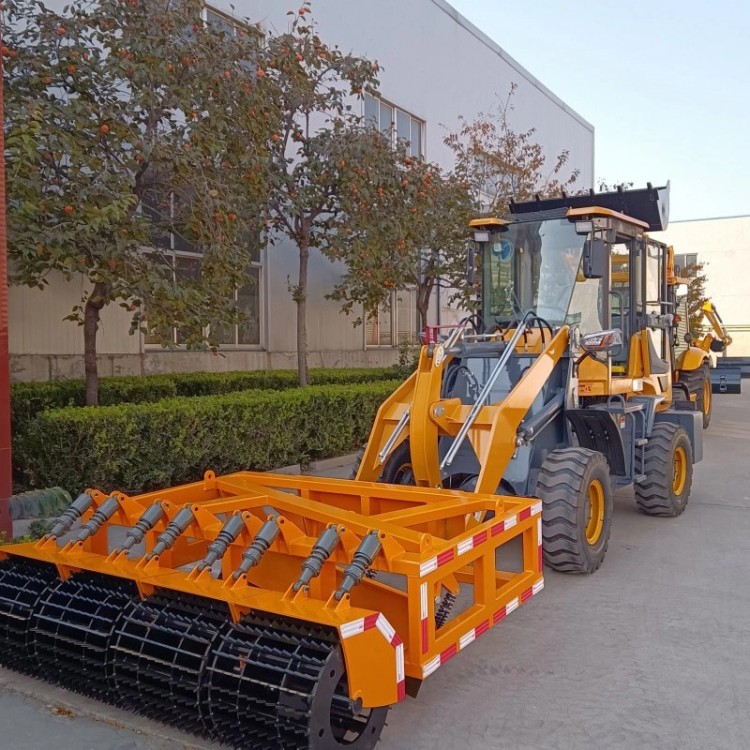
1. Four-link wheel-free contour structure. The Large Vehicle-mounted Rotary Snow Brush does not use bottom support wheels. Instead, a four-link system with springs lets the roller follow the road profile. This reduces hard contact points and helps lower the risk of scratches on asphalt and decorative pavement, which is a common requirement in municipal tenders.
2. Stainless steel hood. The cover over the brush is made from stainless steel to resist corrosion caused by deicing salt and meltwater. In northern regions where salt is applied frequently, this material generally offers better corrosion resistance than painted steel.
3. Gear direct-drive hydraulic motor. The motor connects to the roller through gears rather than belts. This avoids belt slip and helps maintain torque at higher travel speeds, making the brush suitable for long highway runs.
4. High-density polypropylene brush segments as standard. The standard brush uses staggered polypropylene bristles that grip and sweep snow effectively. The material performs well at low temperatures and resists abrasion. For compacted snow or light ice, an optional steel wire composite brush is available.
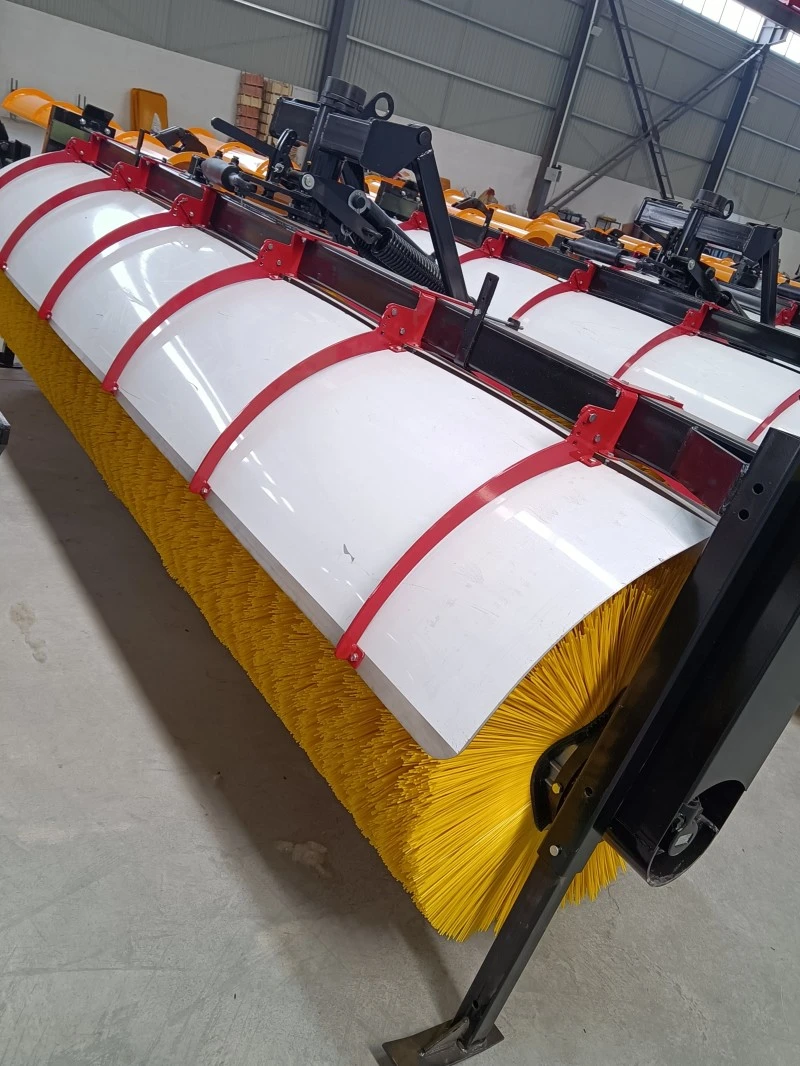
| Item | Parameter |
| Overall Dimensions | 3838×1570×1443 mm (length customizable) |
| Effective Working Width | 2500 to 3500 mm |
| Product Weight | 740 kg |
| Snow Brush Left-Right Rotation Angle | ±30° |
| Max. Ground Clearance | 350 mm |
| Brush Diameter | 815 mm |
| Snow Removal Thickness | ≤150 mm (depending on snow density, moisture, surface condition and operating speed) |
| Snow Throwing Distance | 5 to 10 m |
| Working Method | Hydraulic Drive |
| Working Rotating Speed | 260 rpm |
| Recommended Operating Speed | 10–30 km/h (varies by road type and snow condition) |
| Maximum Travel Speed | ≤60 km/h |
| Hydraulic Requirements (matched to carrier vehicle) | |
| Recommended Hydraulic Flow | Please consult technical team (varies with motor configuration) |
| Operating Pressure | Please consult technical team |
| Motor Displacement | Customized to carrier vehicle |
Key specification considerations for your site:
The complete unit is covered for 12 months or 1,000 working hours, whichever is reached first. Major components such as the hydraulic motor, main pump, gearbox and control valves are covered for 6 months. Repairs and replacement with genuine parts are free for defects not caused by the operator. Failures caused by misuse, overloading or skipped maintenance are charged at spare parts cost only, without shipping included; the customer performs the replacement. Consumable parts like brush segments, hydraulic seals and bearings are not included in the free warranty.
To start a warranty claim, contact the after-sales team with the machine serial number and a description of the issue.
The standard brush is made of high-density polypropylene segments, suitable for loose snow and routine clearing. The optional steel wire composite brush is designed for compacted snow and light ice. It uses a mix of steel wire and polypropylene to increase cutting ability. The choice depends on typical snow conditions in your area.
The brush is designed for heavy sanitation trucks and municipal chassis with front-mount capability and sufficient hydraulic flow. The hydraulic motor displacement is matched to the vehicle. Provide your vehicle model to our technical team so we can confirm compatibility and recommend the correct configuration.
The brush assembly is mounted on four linkage arms with spring buffers. As the ground level changes, the arms extend or compress so the roller stays in contact with the surface. This improves cleaning consistency and reduces stress on the frame and bristles. It also helps the brush pass over manhole covers and curbs without manual adjustment.
Yes. Working width, hydraulic motor size and anti-freezing reinforcement can be adjusted to fit the carrier vehicle and the road conditions. Bulk orders for large winter maintenance projects are accepted.
Inspect the brush segments and hydraulic hoses before each shift. After each operation, remove ice and salt residue. Grease linkage pins weekly during heavy use. Check hydraulic oil level and leaks regularly. If the brush is stored for more than a week, lift it off the ground and cover the roller to prevent ice buildup.
Address
West end of Yadong Street, Qingzhou Economic Development Zone, China
Tel